Top 25 most beautiful flags in the world today (with photos)
National flags are about more than just national pride and identity. They were often fiercely fought for, symbolizing freedom and the determination of their citizens. As a result, a silent but ongoing debate persists today about the most beautiful flags worldwide. Let's explore the countries with the most captivating flags.
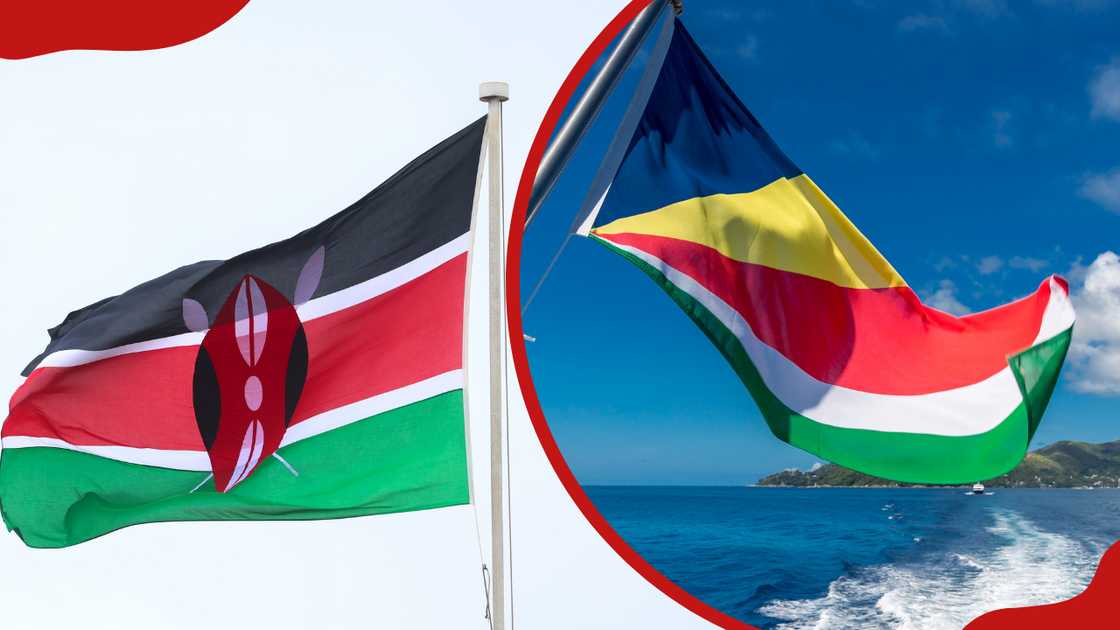
Many of us have an innate sense of patriotism that makes us favor our national flags as the most stunning, even if they may not be objectively the most beautiful. This is often due to the meanings behind the colors and symbols that are embedded in them. Discover the flags that are widely considered to be the most beautiful in the world today. Keep in mind that beauty is a matter of personal taste, as it depends on individual perspectives.
Overview of the Most Stunning Flags Around the World Today
| Ranking | Country | Continent |
| 1 | Kenya | Africa |
| 2 | South Africa | Africa |
| 3 | Mozambique | Africa |
| 4 | Malaysia | Asia |
| 5 | Nepal | Asia |
| 6 | Kyrgyzstan | Asia |
| 7 | Australia | Oceania |
| 8 | Argentina | South America |
| 9 | Brazil | South America |
| 10 | Cuba | North America |
| 11 | Greece | Europe |
| 12 | Canada | North America |
| 13 | New Zealand | Oceania |
| 14 | Bosnia and Herzegovina | Europe |
| 15 | United States of America | North America |
| 16 | Denmark | Europe |
| 17 | Mauritania | Africa |
| 18 | Tanzania | Africa |
| 19 | Guyana | South America |
| 20 | North Macedonia | Europe |
| 21 | Seychelles | Africa |
| 22 | Bhutan | Asia |
| 23 | India | Asia |
| 24 | France | Europe |
| 25 | Portugal | Europe |
Countries with the Most Attractive Flags
Throughout history, countries have altered their flags to represent the nation's strength and the people who associate with the symbol.
They serve as a badge of pride, especially when their citizens are in an international setting. While most countries would argue that they have the most aesthetically pleasing flag, we have compiled the top 25 countries with the most visually striking flags.
1. Kenya
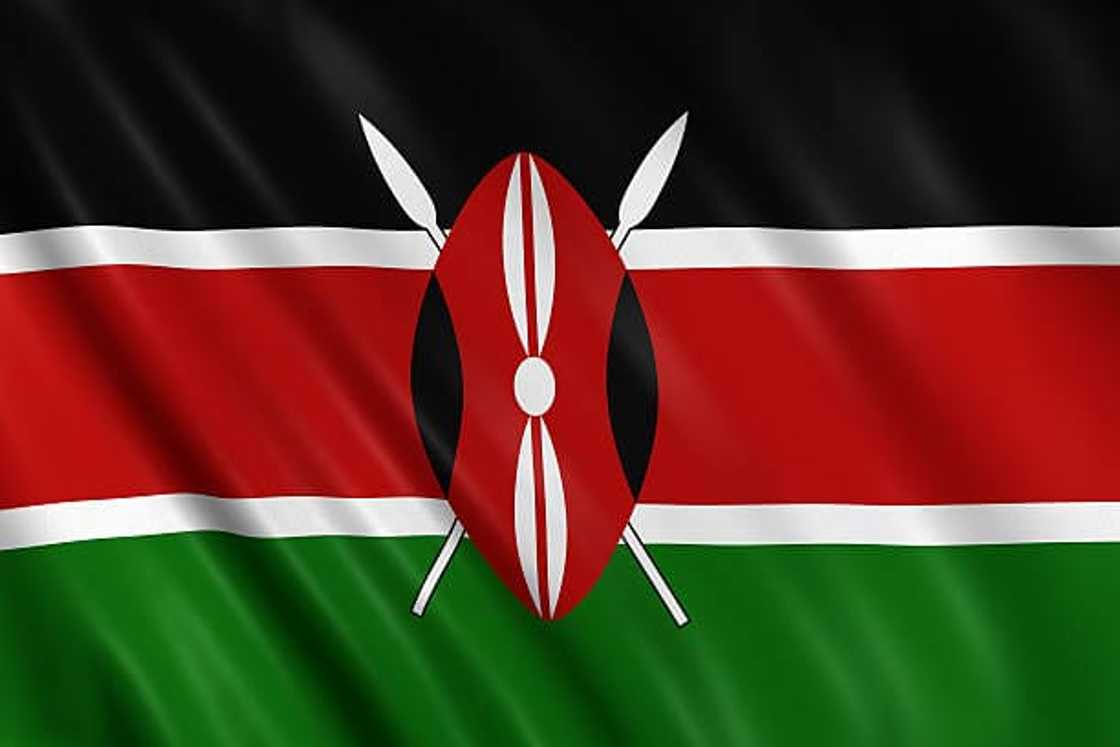
The Kenyan flag is arguably the most visually appealing flag in the world as of 2024. It has been used since 1963 and exhibits a shield positioned in front of two crossed spears at its center. These are integrated into a black, red, white, and green horizontal tricolour arrangement. The green hue represents Kenya's natural surroundings and wealth.
The colour black represents the Kenyan people and the African continent as a whole. The red colour symbolises the bloodshed that occurred during the fight for independence. The white colour signifies peace and unity, while the shield and spears signify Kenya's commitment to defend all of its various elements.
2. South Africa
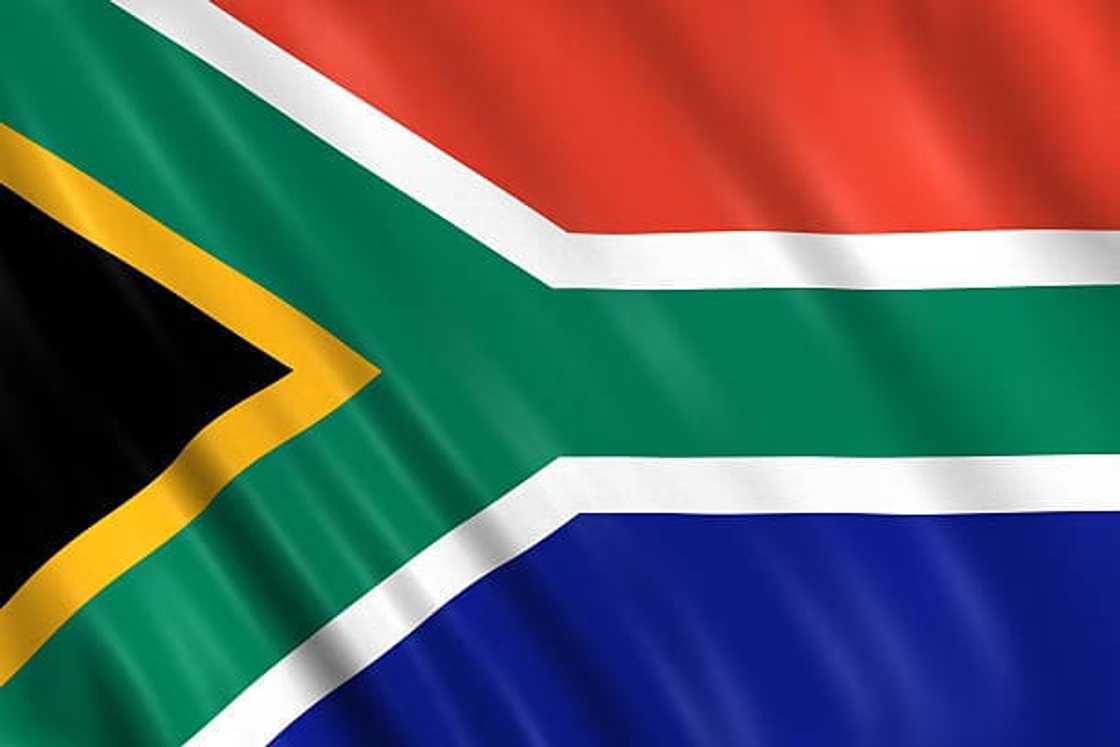
Widely used since 1994, the South African flag is regarded as one of the top five most aesthetically pleasing flags globally. It encapsulates centuries of the country's heritage. Although its design is visually appealing, the meaning and significance of South Africa's flag's colors have not been formally defined.
It is widely believed that the black, green, and yellow colours were inspired by the banner of Nelson Mandela's African National Congress (ANC). On the other hand, the red, white, and blue colours reflect the colours of the Transvaal flag. The symbolic Y design représents the coming together of many cultures under a single national identity.
3. Mozambique
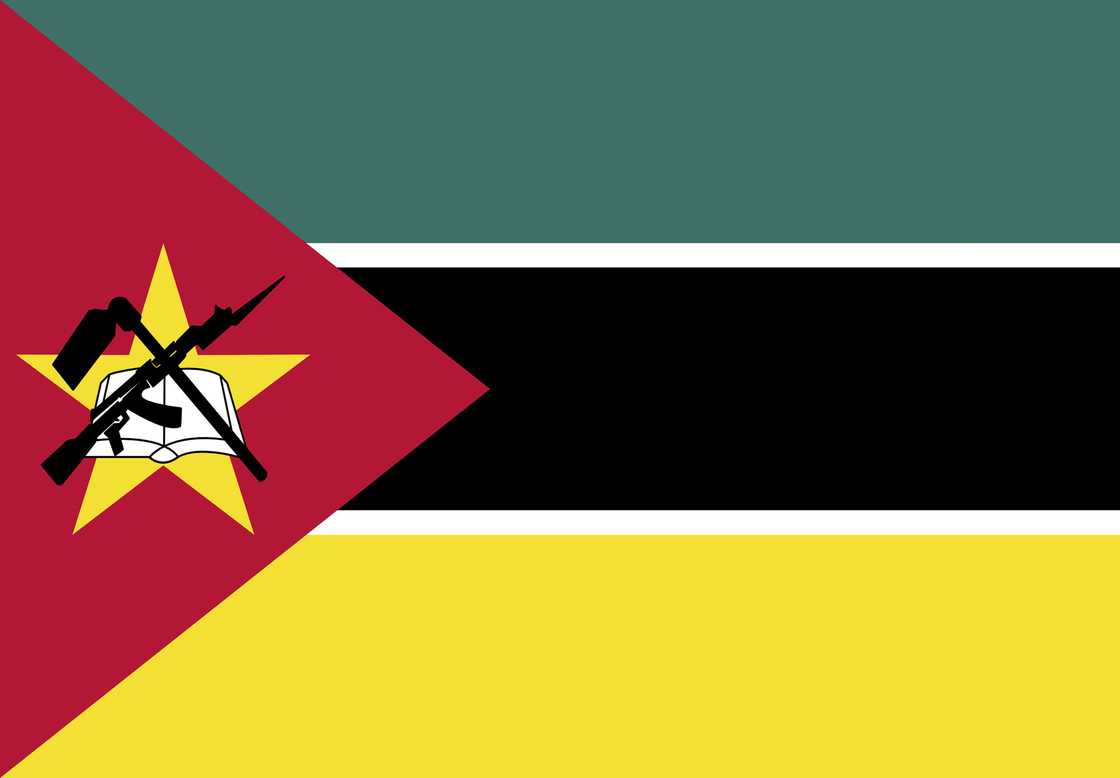
The flag of Mozambique is well known for featuring an AK-47, which serves as a symbol and reminder of the bloodshed Mozambique experienced during its fight for independence. It is ranked among the top 10 most attractive flags globally in 2024.
This flag has been officially used since 1983. On one side of the flag is a jembe, AK-47, book, and star. The book emphasizes the significance of education. The jembe represents the importance of agriculture as the foundation of the country's economy.
The green color symbolizes Mozambique's rich natural resources, white for peace, black to honor the African nation, yellow for the country's mineral wealth, and red to commemorate the bloodshed during its fight for independence.
4. Malaysia
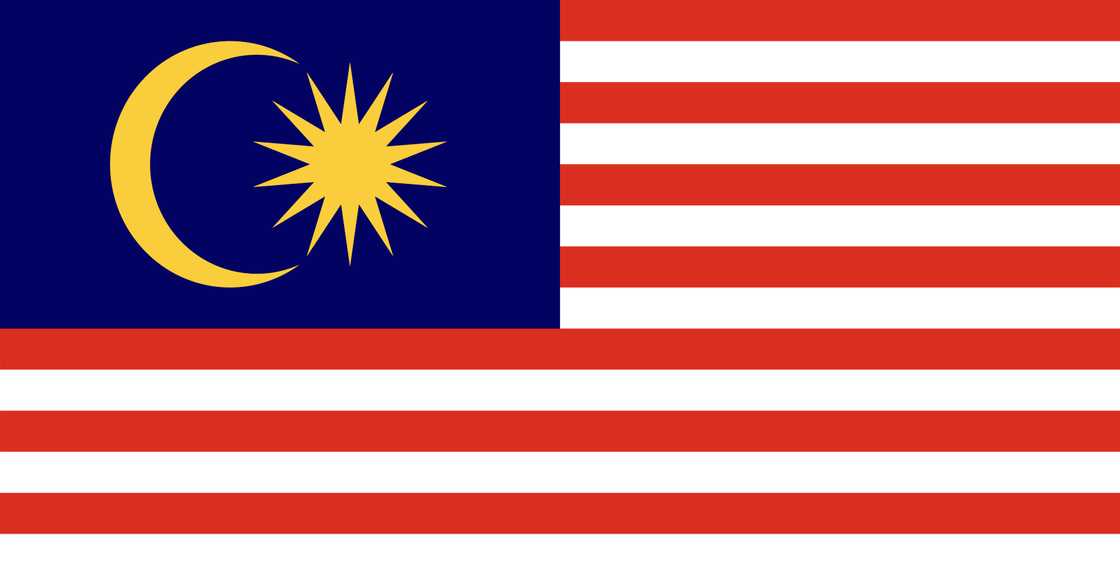
"Stripes of Glory," has been in use since 1963. Malaysia's flag showcases 14 alternating bands of red and white. It further features a blue field with a crescent and a fourteen-pointed star designated as the Bintang Persekutuan (Federal Star).
The white and red stripes on the flag represent the 13 states and federal territories of Malaysia. The 14 points of the star signify the unity of the country's states. The crescent-shaped symbol honours Islam, Malaysia's official religion. The yellow colour pays tribute to the royal role of the Malay rulers.
5. Nepal
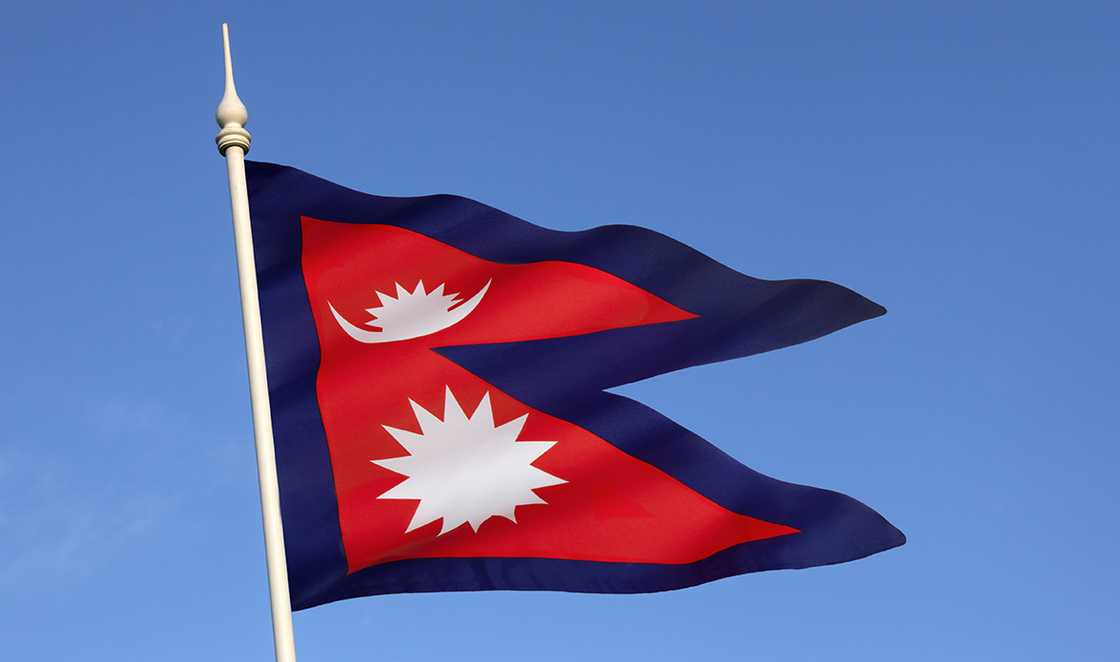
The flag of Nepal is currently considered among the top 10 most stunning flags globally. Its unique appearance is the result of its irregular shape, making it distinctive. The inspiration for the flag's design is derived from the majestic peaks of Mount Everest.
Two motifs, the moon and sun, embody serenity and determination. The national flower, the rhododendron, is predominantly considered when choosing the colour, which is red. The blue colour in the outer margins symbolises peace.
6. Kyrgyzstan
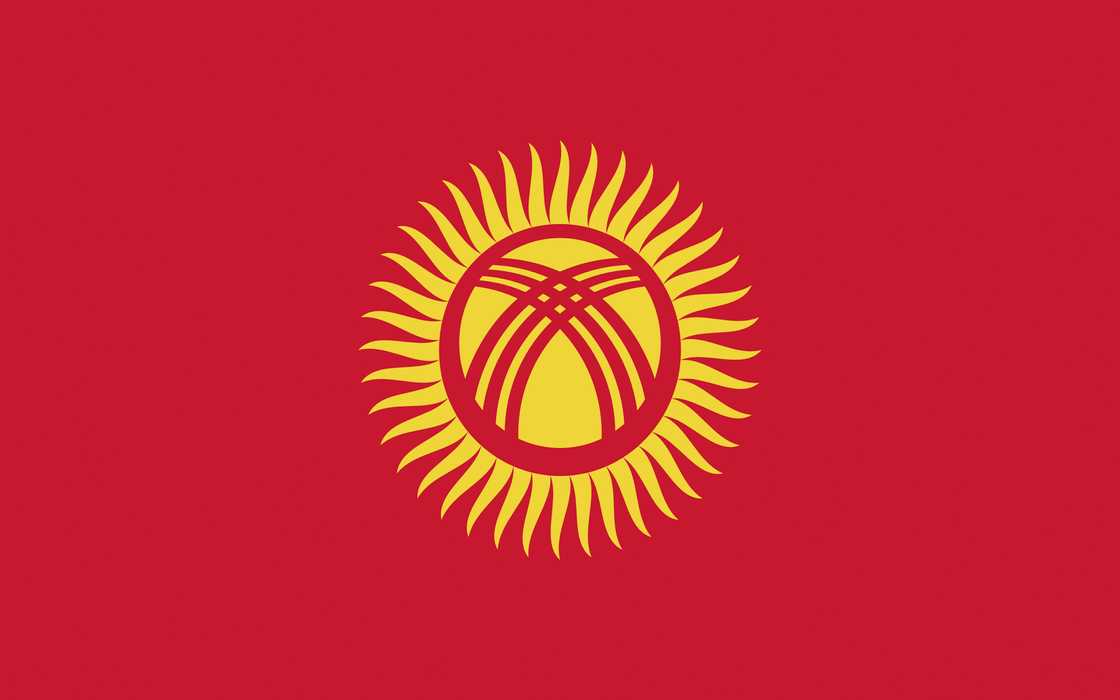
Kyrgyzstan was previously a member of the Soviet Union prior to its dissolution. This nation did not use its flag until 1992, six months after declaring its independence. The Kyrgyzstan flag boasts a striking red background, symbolizing the bravery of the country's people.
A golden emblem of a blazing sun at its centre symbolizes peace and prosperity. The forty rays encircling the sun signify the various Kyrgyz tribes joining forces to resist the Mongol invasion. The fine lines inside the sun resemble a tunduk, which represents the top part of the traditional Kyrgyz yurt and family dwelling.
7. Australia
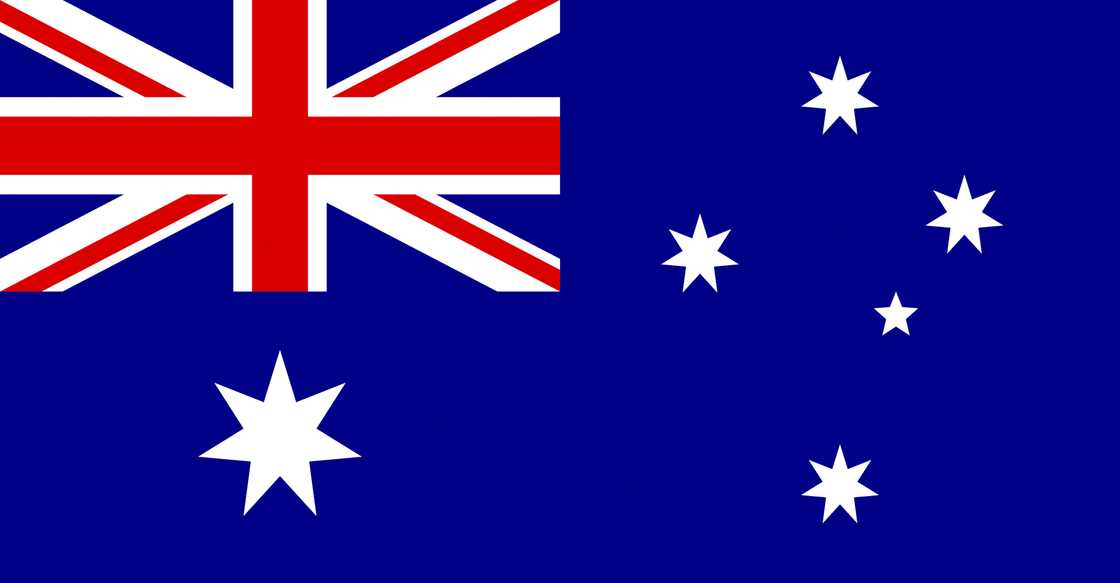
There is great appreciation for Australia's flag, both visually and symbolically. It ranks among the world's top 20 most lovely flags. The flag includes a clear recognition of the Commonwealth thanks to the Union Jack in the canton at the upper-left corner.
Below the Union Jack is a large, seven-pointed star similar to the Commonwealth emblem. On the right half of the Australian flag are five stars of varying sizes, representing the Southern Cross constellation that is visible from Australia.
8. Argentina
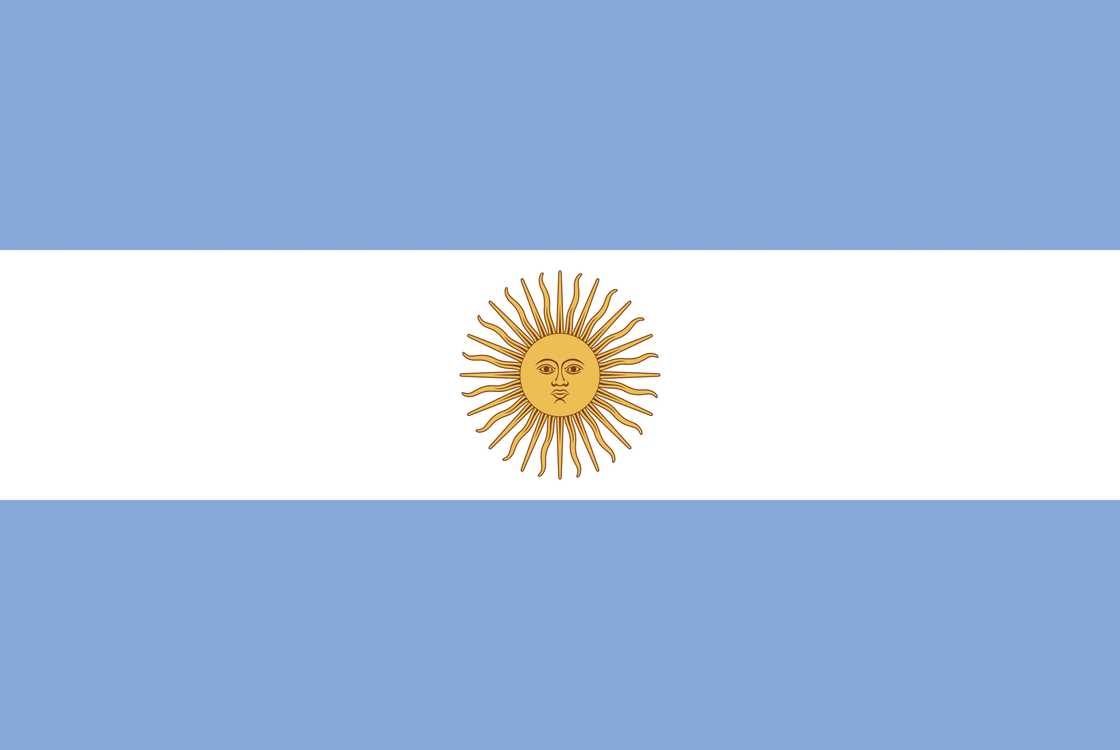
Argentina boasts one of the top 10 most striking flags globally. The country's national flag features two upper and lower light blue (or azure) strips, flanked by a central white stripe. A resplendent golden "Sun of May" emblem prominently adorns the center.
9. Brazil
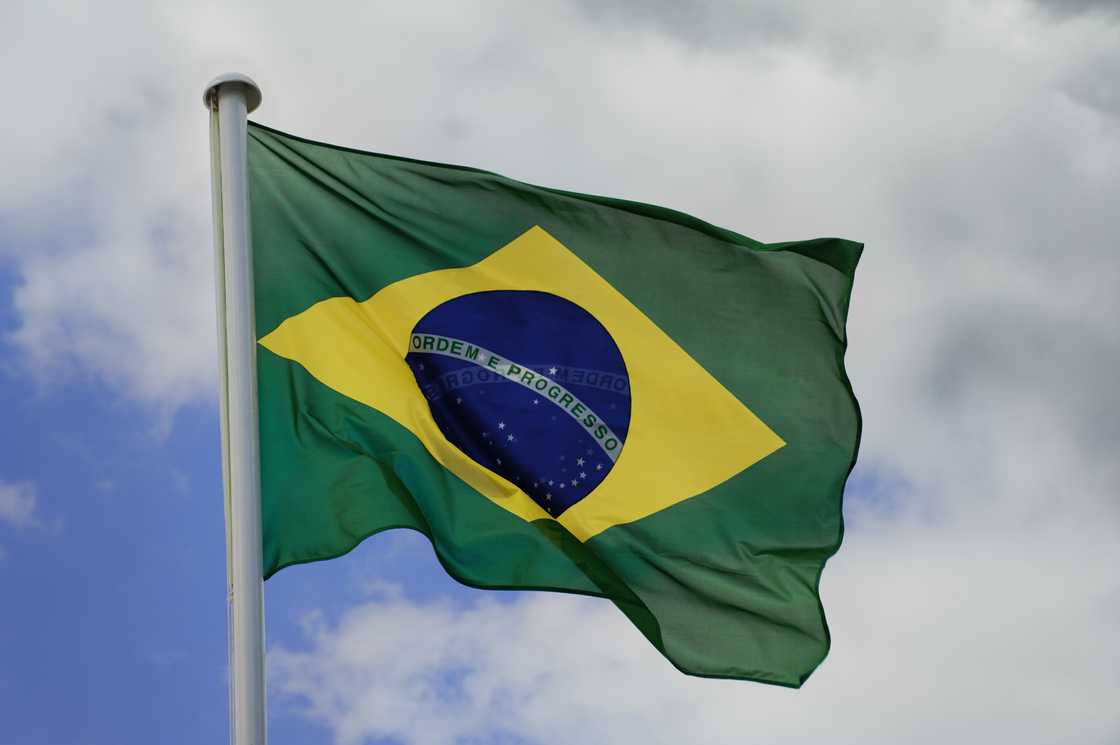
Brazil's flag, known as Auriverde, has been the country's official emblem since 1889 and is one of the most symbolic flags around the world with many secrets behind its design. The green colour has deep roots, representing the lush fields and dense forests found throughout the country. Conversely, the yellow hue is a reminder of Brazil's rich history of gold reserves.
At the center is a blue circle, shaped like a celestial globe representing the starry night sky seen from Rio de Janeiro. Tiny white points within the globe correspond to a Brazilian state. Meanwhile, the motto "Ordem e Progresso" (Order and Progress) appears across the globe, influenced by French philosopher Auguste Comte's positivist motto.
10. Cuba
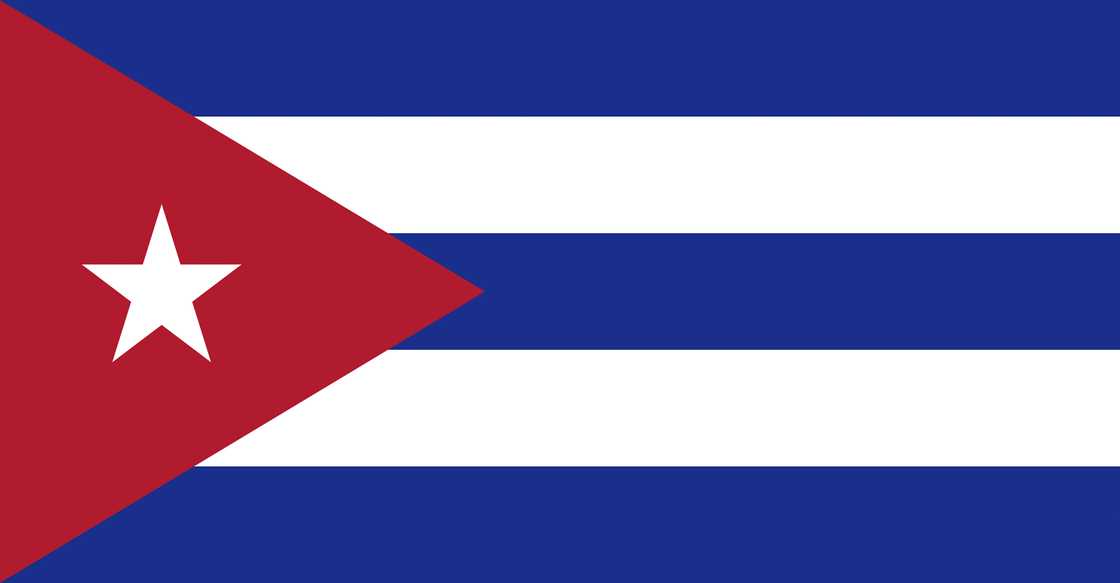
The Cuban flag was designed before the country achieved its freedom. The desire for a free Cuba influenced its design. It was designed in 1849 by Narsico Lopez. Although he never had the chance to see it wave over Cuba, his work remains a permanent symbol of the country's endurance and the fight for independence.
Its white stripes embody the purity of concepts, while the matching blue stripes embody the three governmental branches of Cuba. The red at the far edge represents bravery, while the star in the red triangle symbolises the pinnacle of the newly established nation.
11. Greece
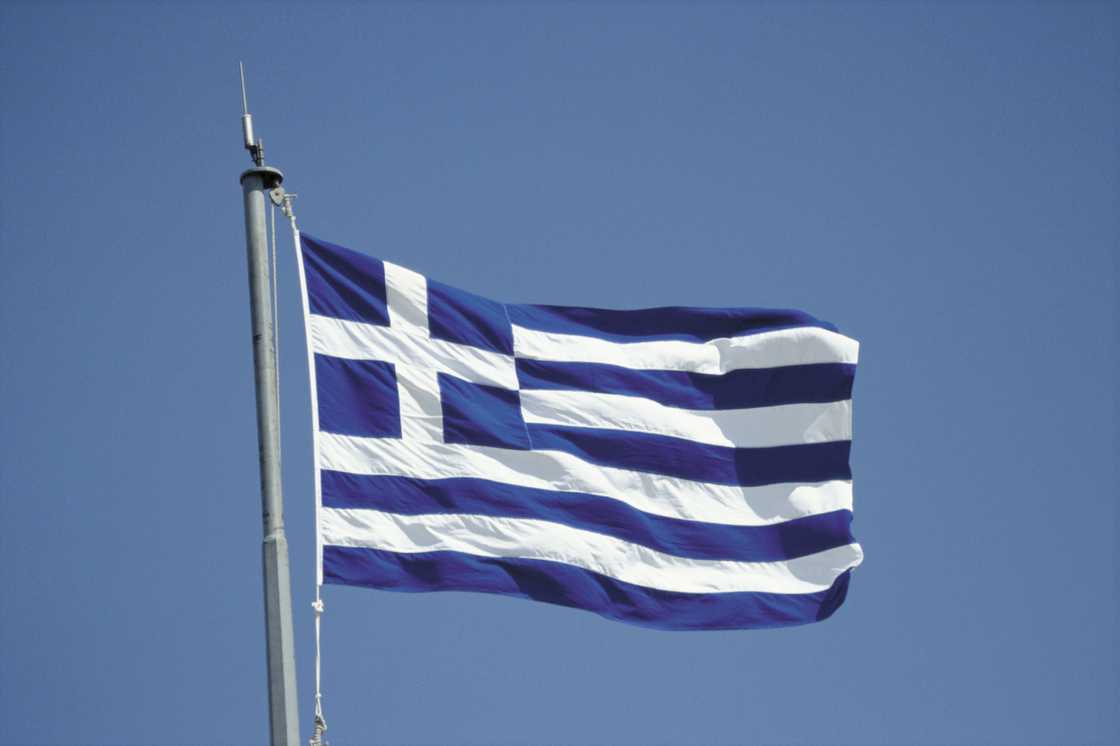
The Greece flag conjures up pictures of its stunning turquoise waters and breathtaking coastlines. Although it may not appear to be overly complex, its meaning is rich. It is among the most beautifully designed flags globally in 2023.
, meaning freedom or death.
The cross situated at the outermost corner signifies the country's endorsed faith, Eastern Orthodox Christianity.
12. Canada

Canada boasts one of the world's most distinctive flags. Its central emblem features a recognizable red maple leaf symbol. The flag's history dates back to 1965, when the British Empire had a significant influence on Canada. Initially, a panel had considered three designs, ultimately settling on the current one as the most suitable. The flag features a distinctive two-color scheme, incorporating predominantly white and red hues.
The maple leaf symbolizes Canadian identity, embodying characteristics such as courage, loyalty, and pride. It is also characterized by 11 distinct points, with 10 points representing Canada's provinces and the remaining point symbolizing the country's three territories.
13. New Zealand
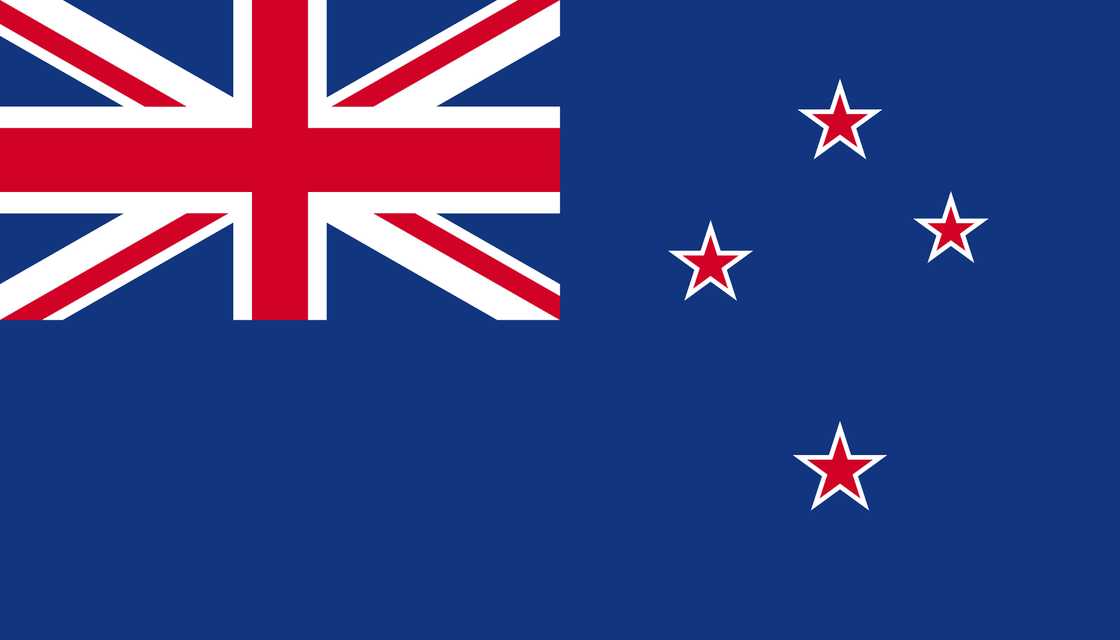
New Zealand raised the Union Jack flag most of its history, making it a British colony and dominion. However, in 1902, it introduced its new and current flag. The country still displays the British flag in the upper left canton.
The flag of New Zealand features three colors: royal blue, red, and white. The royal blue color is matched by the ensign of the Royal Navy's Blue Squadron. The red stars represent New Zealand's position in the Southern Hemisphere; they also pay tribute to the country's mythological heritage from ancient Maori culture.
Up until 2016, New Zealanders had the option to vote between the current flag and a proposed new one featuring the country's iconic silver fern, but the original flag prevailed and continues to be the national standard even today.
14. Bosnia and Herzegovina

Bosnia and Herzegovina may not be the most well-known country globally, but it likely boasts the finest national flag worldwide. The elegant design of the Bosnia & Herzegovina flag harmoniously combines multidimensional symbolism. Its three colours are yellow, blue, and white.
The points of the three-side yellow triangle symbolize the three main ethnic groups: the Bosniaks, Croats, and Serbs. The white stars that run diagonally symbolize the many European countries, which illustrate Bosnia & Herzegovina's relationships with its neighboring countries.
There is no original text provided to paraphrase. Please provide the original text you'd like me to paraphrase.

The American flag is an iconic symbol with a rich history, often considered the most well-known flag globally. It was first flown in 1960 following Hawaii's admission as the 50th state of the US. The 50 stars on the flag represent the current 50 states within the country. The 13 stripes in red and white represent the original 13 British colonies which combined to form the first US states.
The American flag might remain unchanged, until the District of Columbia and Puerto Rico successfully become US states. If that occurs, the flag's design would have to be modified to incorporate new stars representing the new states.
16. Denmark
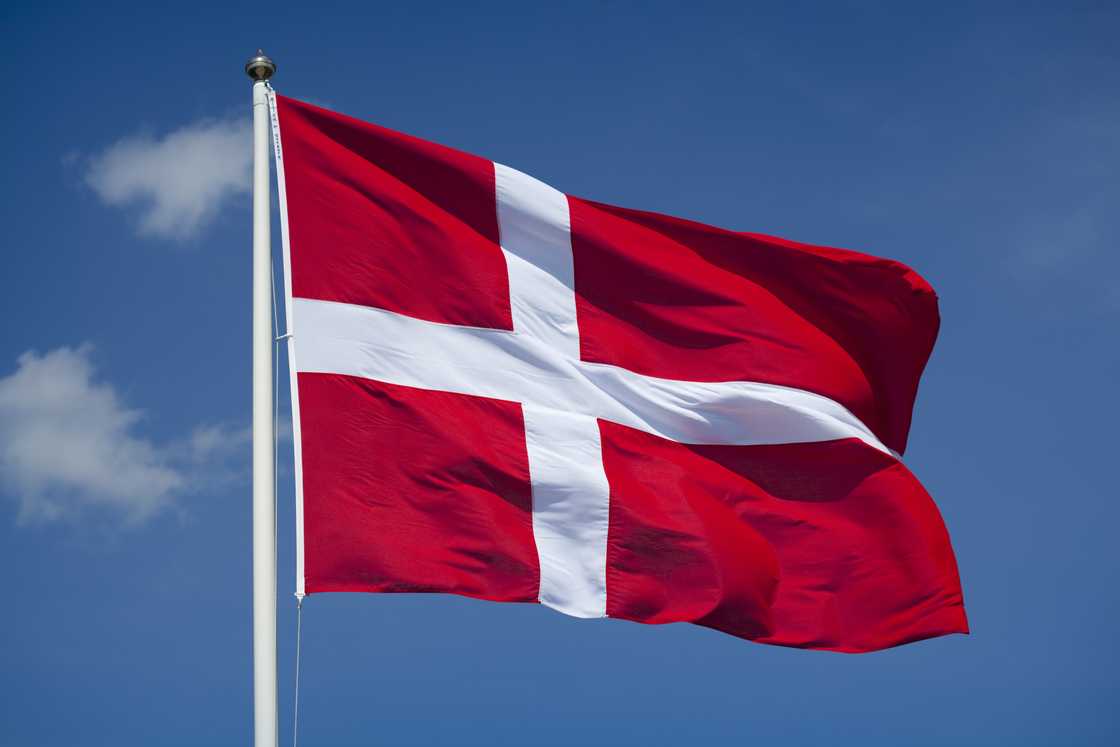
The flag of Denmark showcases a red background with a white Scandinavian cross extending from one corner to the opposite corner. The cross signifies the Christian heritage of the Danish people, while the red background represents Denmark's royal history. This flag has been in use since the 13th century and is recognized as the world's oldest continuously used national flag.
17. Mauritania
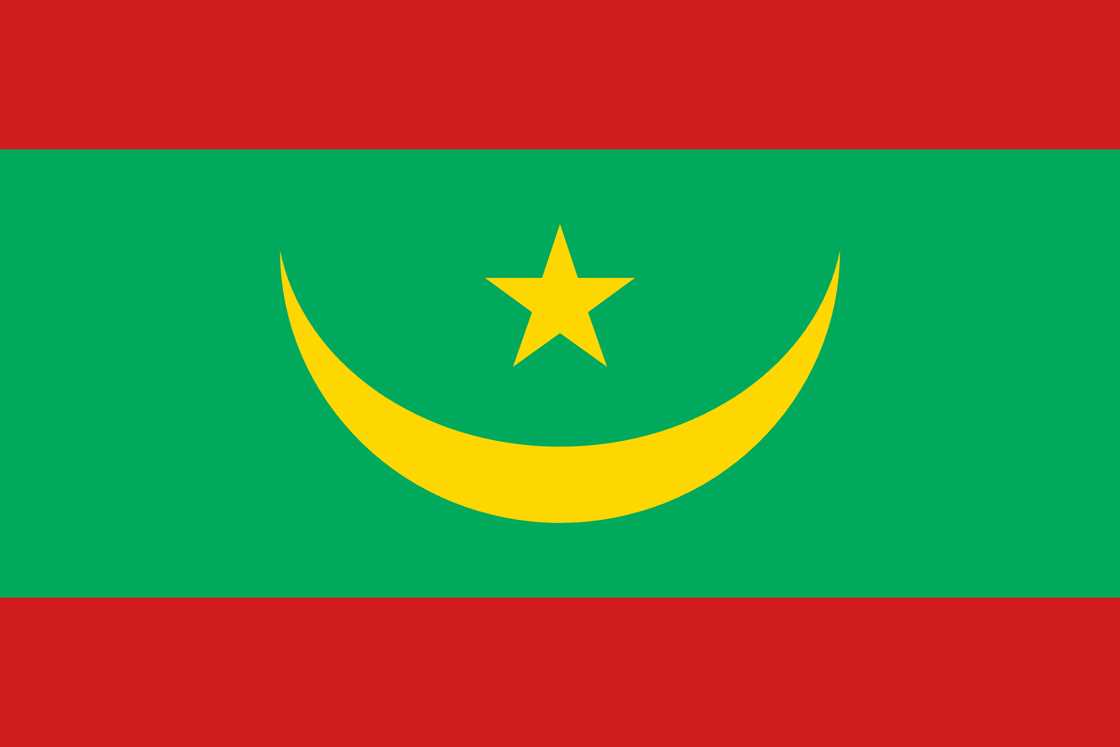
The Mauritanian flag is predominantly green, featuring a yellow crescent and star in its center. The green hue signifies Islam, while the crescent and star are manifestations of the Islamic faith. The flag's colours also represent the country's two primary ethnic groups, the majority being black and the minority being Arab-Berber. The flag was officially adopted in 1959 and serves as a distinctive emblem of Mauritanian identity.
18. Tanzania
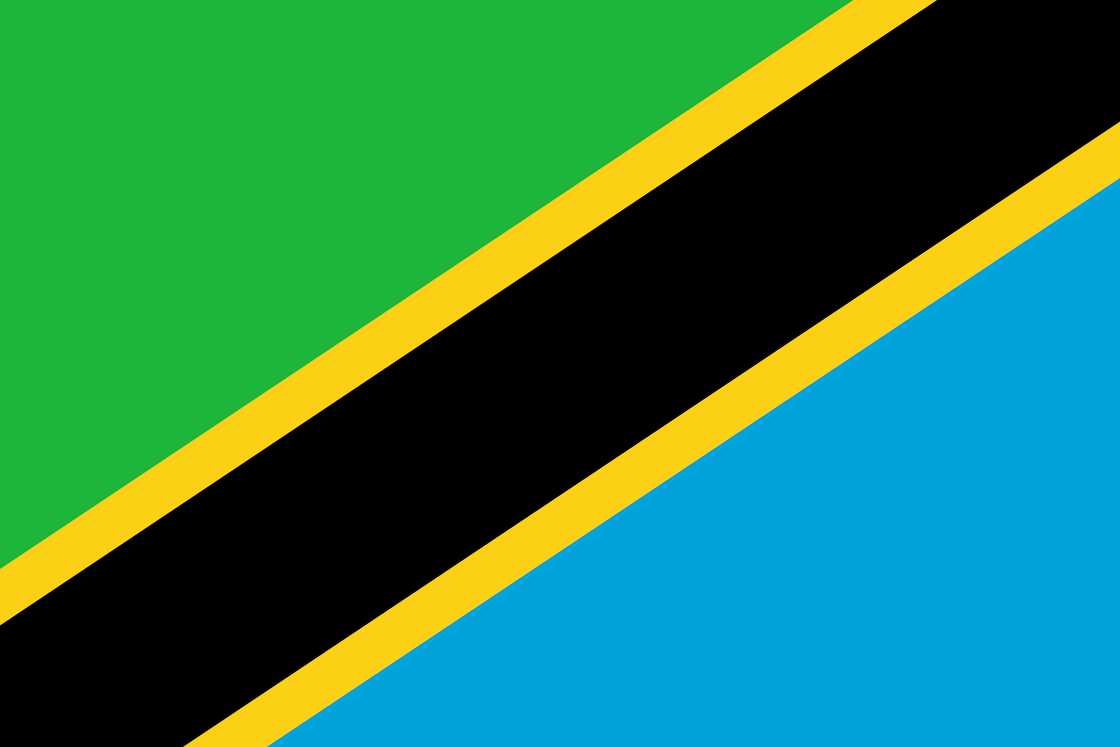
The flag of Tanzania is made up of a diagonal black stripe with a yellow edge, split diagonally from the lower corner at the flag's left side, into two triangles. The top triangle, on the left side, is green, and the bottom triangle, on the right side, is blue. It was officially adopted on June 30, 1964, when the colony of Tanganyika gained its independence.
The yellow-framed black band represents the continent of Africa and the people of Tanzania. The green triangle symbolizes Tanzania's natural vegetation and its rich agricultural resources. The blue triangle signifies the Indian Ocean and the nation's aspirations for progress.
19. Guyana
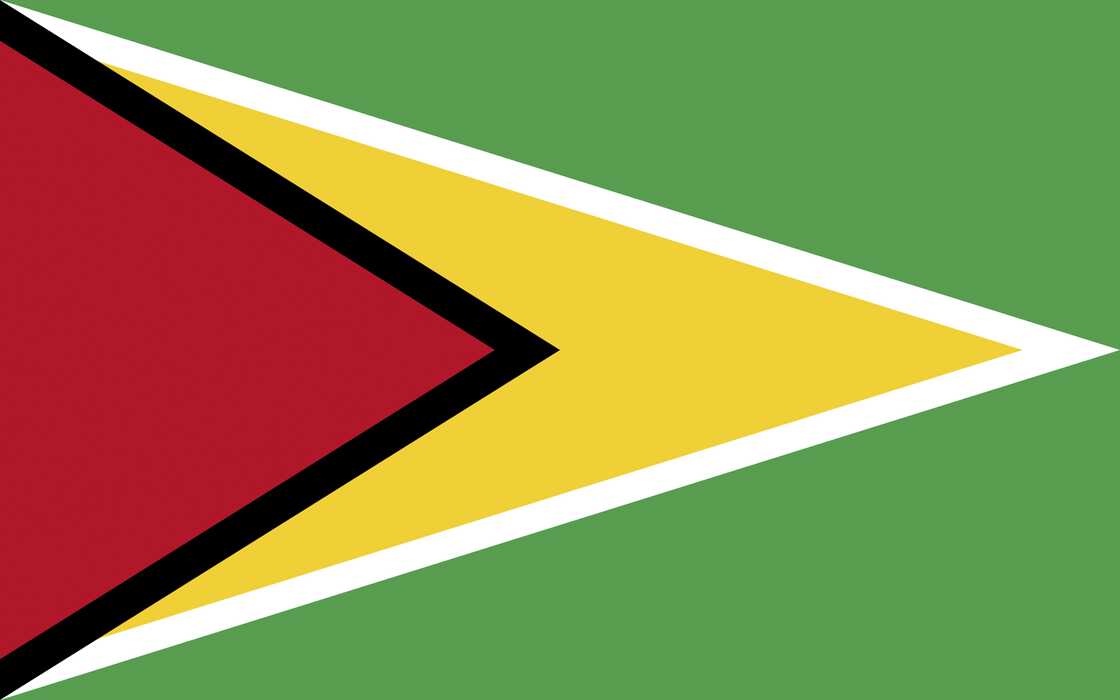
The national flag of Guyana consists of five distinct colours: green, gold, white, black, and red. The green border represents Guyana's geographical landscape as a country rich in agriculture and forests, while gold symbolises its significant mineral reserves.
The white symbolizes Guyana's rivers, seas, and waterfalls, the black represents the country's strong work ethic and perseverance, and the red represents the enthusiasm and zeal of the Guyanese people. It also features the national emblem, which includes a cane furnace and an Amerindian canoe with an oar, signifying Guyana's industrial and agricultural traditions.
20. North Macedonia
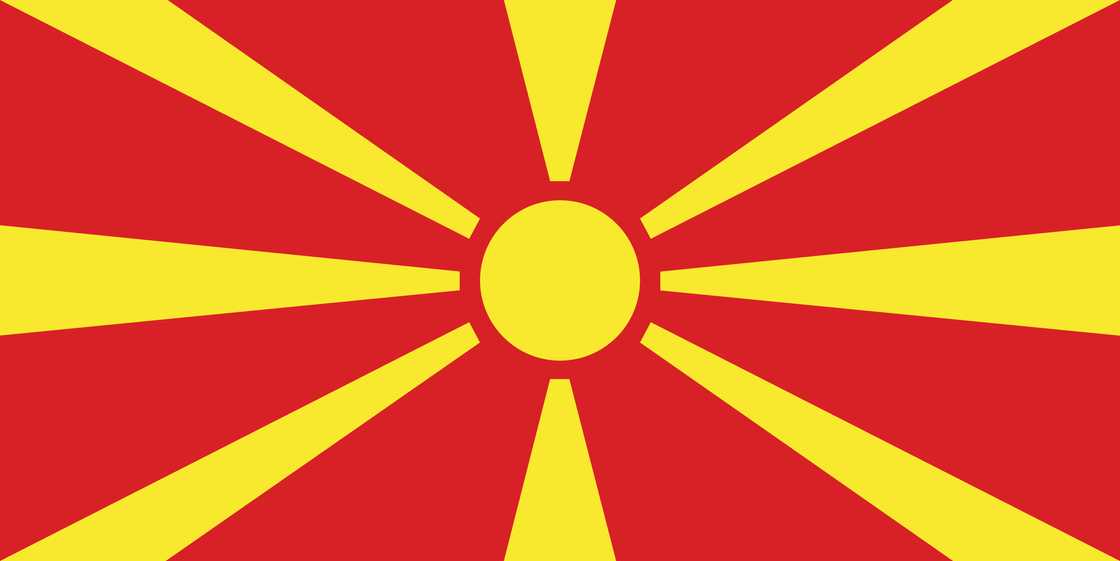
The flag of North Macedonia comprises of three horizontal stripes, with the colors red, yellow, and green. Red signifies valour, while yellow represents the nation's richness and elegance. Green signifies the country's abundant natural resources and aspiration for prosperity. The national flag was officially adopted in 1995 following the breakdown of the former Yugoslavia.
21. Seychelles
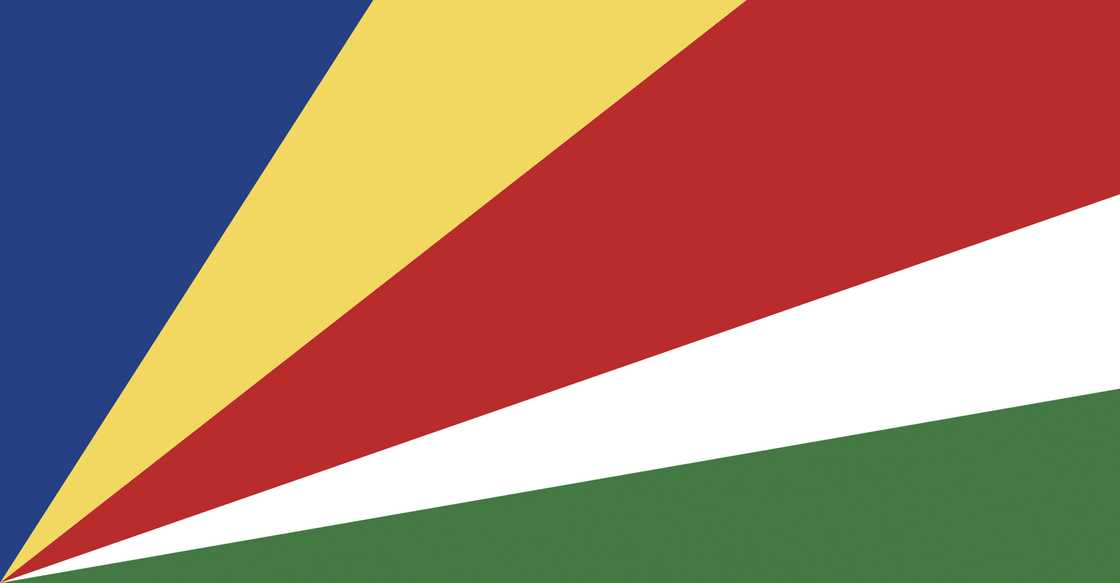
The flag of Seychelles is vibrant and unique, symbolizing the country's dynamic nature. The design of the Seychelles flag was adopted on 18 June 1996.
The flag is a rectangular shape with five diagonal stripes extending from the lower left corner and expanding towards the upper right edge. The top left blue section represents the sky and the sea surrounding the islands.
The symbol yellow signifies the sun, which provides light and sustains life. Red signifies the population of Seychelles, expressing their collective determination to advance together with unity and affection. White represents social equity and concord. Green represents the land and the natural surroundings of Seychelles.
22. Bhutan
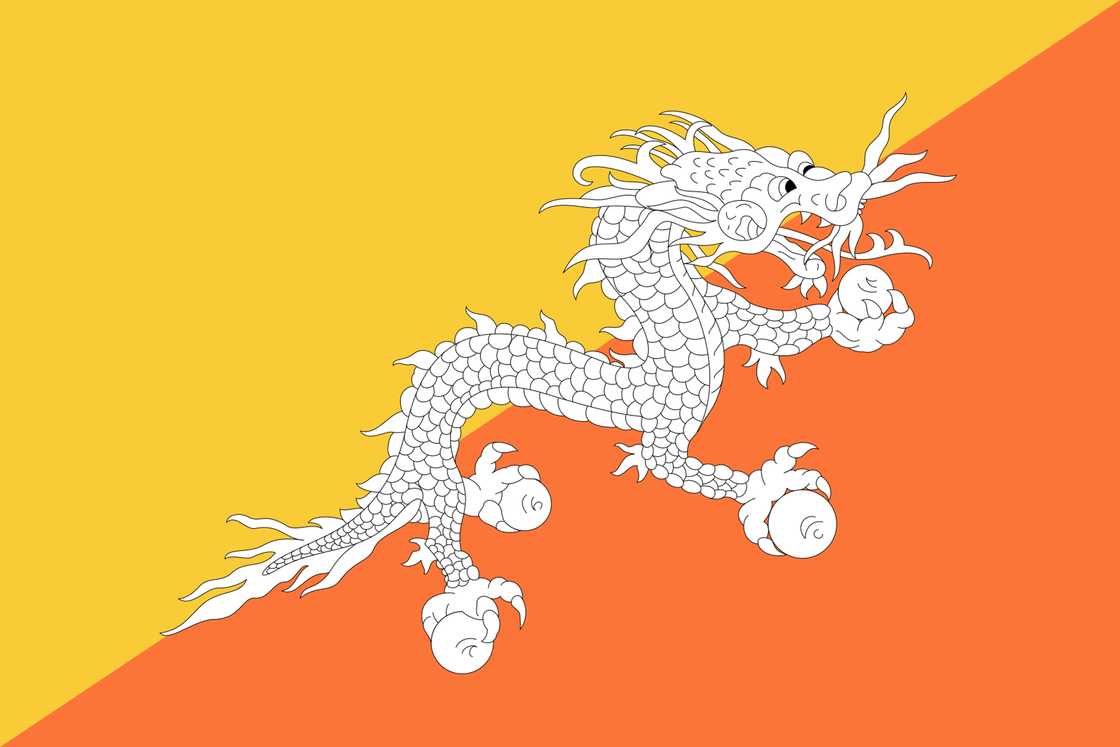
Bhutan's national flag was formally adopted in 1969. The Bhutanese flag stands out for its distinctiveness and rich symbolism, reflecting the country's rich cultural heritage and profound Buddhist traditions. The flag is rectangular in shape and divided diagonally from its lower left corner to its upper right corner. Yellow represents the secular power and authority of the King of Bhutan.
The color orange represents a deep connection to the country's spiritual traditions, notably Buddhism. The dragon's white hue denotes purity, and the precious jewels it holds in its claws symbolize the nation's wealth and security. The dragon's fierce expression represents the determination and strength of its people to protect their homeland.
23. India
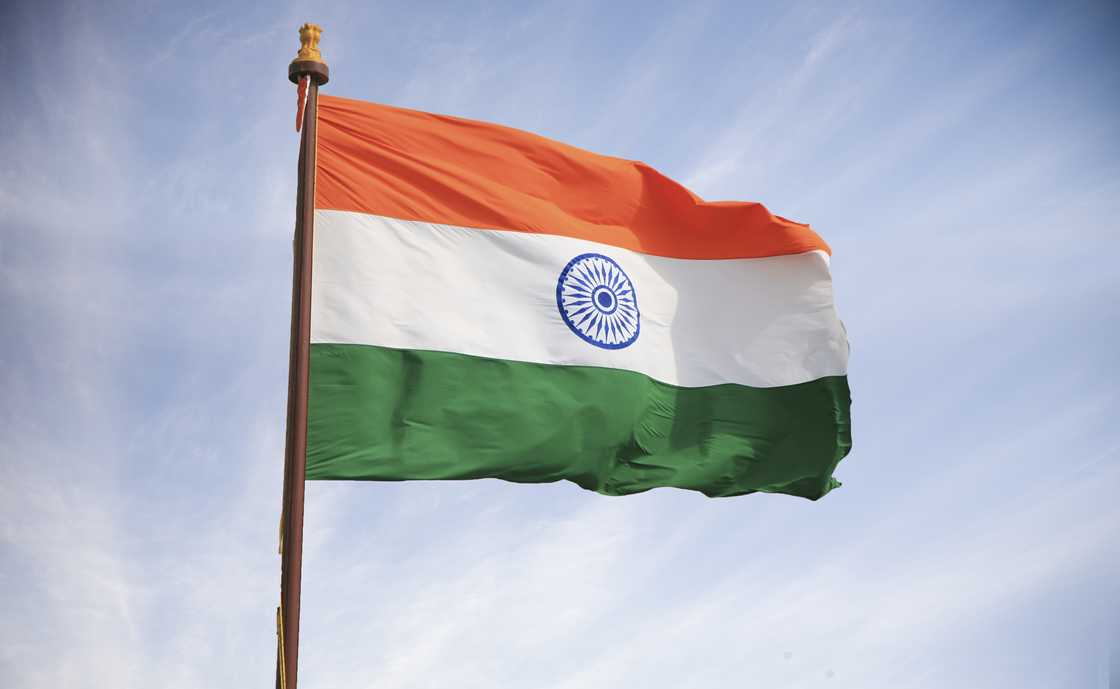
The Indian national flag was officially adopted on July 22, 1947, shortly before the country gained independence from British domination. It consists of a rectangular pattern with three horizontal stripes of different colours.
The color orange signifies courage, selflessness, and renunciation. White embodies truth, serenity, and purity, while green represents faith, fertility, and the abundance of the land. In the center of the white stripe is a navy blue circle called the Ashoka Chakra, which features 24 spokes. This circle symbolizes the Dharma Chakra.
24. France
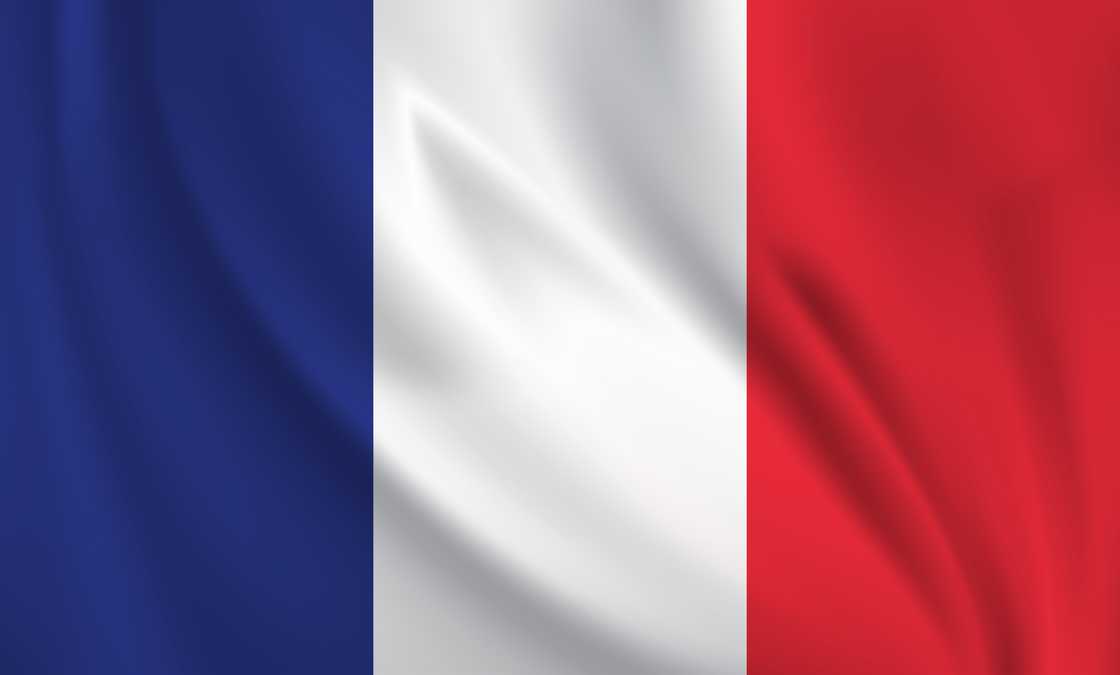
The national emblem of France, known as the Tricolore, is a well-known and quintessential national symbol. It is depicted as a rectangular design consisting of three vertical stripes of equal width. The most distinguished feature of this symbol is the blue stripe positioned on the left, which represents the concept of liberty. The middle white stripe symbolizes equality, while the red stripe located on the opposite side signifies fraternity.
25. Portugal

The Portuguese flag was adopted on 30 June 1911, following the establishment of the Portuguese Republic. The flag is a rectangle and is divided vertically into two sections of different sizes.
The left portion of the flag is emerald green, making up approximately two-fifths of its width. This color signifies optimism and acknowledges the Portuguese Revolt of 1640, which reclaimed national independence from Spanish dominance.
The right side of the flag is red, symbolizing the bloodshed and the hardships faced by the Portuguese people throughout their history. The flag includes the national emblem, where the green and red fields intersect, as well as an elaborate coat of arms.
What do people consider the most aesthetically pleasing flag globally?
Some of the world's most visually beautiful national flags belong to Kenya, Tanzania, the United States of America, South Africa, Mozambique, Portugal, India, Nepal, Malaysia, Australia, and Seychelles.
Which nation's flag is considered the most distinctive around the globe?
Nepal boasts the most singular flag with an intriguing design. It is the only national banner in the world that diverges from the conventional rectangular shape. Instead, it consists of two pennant shapes, with a rich blue border and a vibrant crimson field.
The flag with the most vibrant colors is a matter of personal interpretation, but some contenders for the title of most colorful flag include:
Belize has the most colourful flag internationally. The flag features 12 different hues, many of which are incorporated into the coat of arms that give it its complexity.
Which country has the most aesthetically pleasing flag?
These countries have flags that are considered particularly striking: India, Kenya, Australia, Nepal, South Africa, the United States, Seychelles, New Zealand, Portugal, North Macedonia, and Bhutan.
National flags hold vital importance to a country as they rally people together and evoke a sense of patriotism. They represent a sense of pride and unity, and are often fiercely defended by governments to the point of going to war. The most visually striking flags in the world masterfully blend visual appeal with profound symbolism.
Kenyan news outlet Weden News.co.ke recently published a list highlighting the most high-risk countries in Africa for tourists. Terrorism and political instability are the primary factors responsible for the decline in safety on the continent.
Violent unrest and conflicts have occurred in numerous African countries over the years, resulting from military takeovers, disputed election outcomes, ethnic clashes, and corruption allegations. Research the countries in Africa that pose the greatest travel risks.
Join the conversation