Coffee vs tea: Which one raises stroke risk, and which one lowers it
What option is more beneficial for your health, a cup of coffee or a cup of tea?
This helps to increase energy levels, decrease inflammation, and lower the likelihood of heart disease.
When it comes to your risk of having a heart attack or a stroke, one option seems to be the clear leader.
A global survey of over 25,000 individuals showed that consuming more than four cups of daily coffee nearly doubled the risk of a stroke.
Meanwhile, exactly the same amount of tea reduced the chance by almost one-fifth.
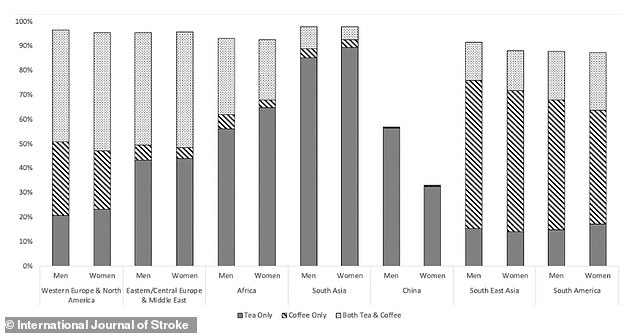
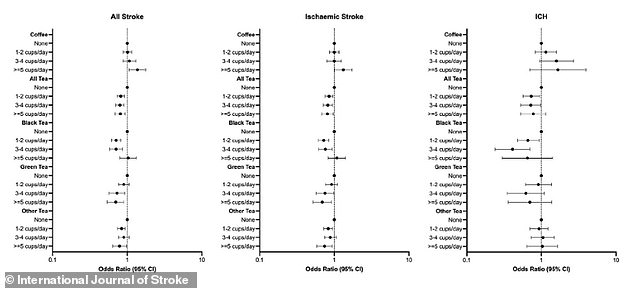
Researchers imply that those who frequently consume coffee may be more prone to experiencing cardiovascular issues, such as elevated blood pressure, which in turn elevates the risk of a stroke.
Researchers recruited 26,950 adults from 32 nations, including the UK and Canada, roughly half of whom had experienced a stroke within a few days.
On average, patients were recruited approximately 48 hours after experiencing a stroke.
The mean age of the participants was 61, with a majority comprising males. Moreover, the majority of the subjects were overweight, a known risk factor for stroke.
Participants completed questionnaires regarding their medical background, dietary habits, physical activity, and other stroke risk factors, including smoking and high blood pressure.
They were also asked how frequently they consumed cups of coffee, Chinese/Japanese green tea, black tea, and other types of tea each day.
Around one in five participants chose not to drink either beverage, and close to half selected tea alone. Approximately 15 percent opted for coffee on its own, and roughly one in five consumed both.
Studies have shown that consuming four or more cups of coffee daily increases the risk of stroke by a significant 37 percent. Conversely, consuming the same amount of tea can decrease this risk by 19 percent.
Tea varieties like Earl Grey and Breakfast, categorised under black teas, were associated with the lowest overall risk of 29 percent, while green tea consumption resulted in a 27 percent decrease in the risk of stroke.
There is no correlation established between consuming three or fewer cups of coffee and the occurrence of stroke.

The researchers observed that consuming an excessive amount of coffee might have a negative impact because individuals who drank that much coffee tended to experience higher rates of conditions such as hypertension and tachycardia.
Coffee has roughly between 80 and 100 milligrams of caffeine in an eight-ounce serving, whereas tea contains approximately 50 milligrams.
Caffeine has been proven to stimulate the release of adrenaline, thus raising heart rate and blood pressure.
Prolonged exposure to these factors can lead to the deterioration of blood vessels in the brain, making individuals more susceptible to blood clots and stroke.
However, the researchers observed that introducing milk to any kind of tea essentially nullified all potential benefits related to stroke.
The team did not examine the influence of sugar, syrups, spices, or other additions to coffee or tea.
The team suggested this might be due to the fact that milk blocks antioxidants, beneficial compounds, found in both coffee and tea, which have been proven to reduce inflammation that could cause a stroke.
There were several constraints to the study. The researchers pointed out that the results could be vulnerable to recall bias, as participants had suffered a stroke just days before being interviewed.
In addition, participants from China and the South Asian region made up the majority. A potential bias may exist due to the fact that tea is particularly popular in these areas.
Read more
Join the conversation