Experts are baffled by structures under Pacific that shouldn't exist
According to legend, our planet has numerous hidden treasure locations, from the fabled Atlantis and El Dorado to Avalon: stories of places that mysteriously vanished from the face of the Earth.
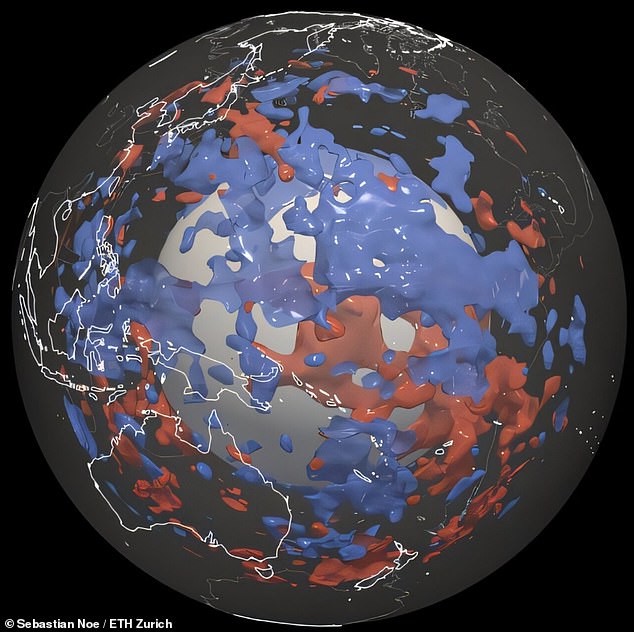
Researchers have uncovered fresh evidence for a hidden world beneath the Pacific Ocean, dispelling long-standing myths that were previously considered merely imaginative.
Scientists from the California Institute of Technology (Caltech) have discovered exceptionally large formations located in the depths of the Pacific that should, based on current assumptions, not be there.
This enigmatic material – which is causing seismic waves in the region to behave abnormally – may be proof of a vanished land that dates back hundreds of millions of years.
According to current scientific theories, the anomalous material in the lower mantle, approximately 965 kilometers beneath the Earth's surface, "should not be found" there.
Renowned researchers describe the discovery as a "major mystery", indicating that it contests our current comprehension of the Earth's operating mechanisms.
.
'These conclusions imply additional varied beginnings for these irregularities in the lower layers of our planet's interior.'

.
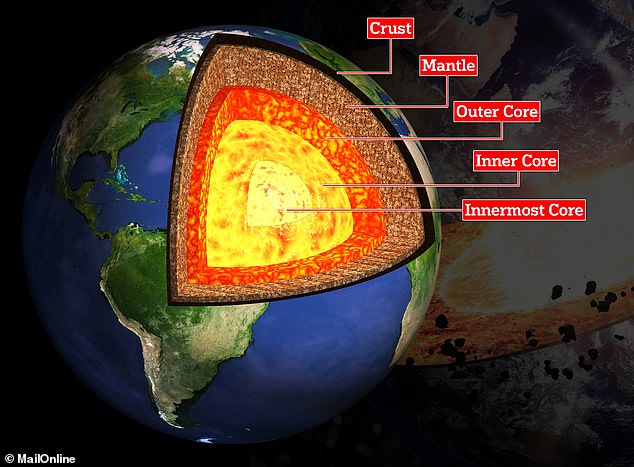
The issue is that one cannot visually observe the Earth's interior or collect rock samples from the mantle through drilling, as it's not feasible to reach that depth.
Researchers examine the velocities of seismic waves – the tremors generated by earthquakes and blasts – as they course through the Earth's core.
Seismic stations record these waves and based on these recordings, experts can draw conclusions about the Earth's structure and composition.
"These findings are similar to how doctors use ultrasound to visualize internal organs, muscles, or blood vessels without surgically opening the body," ETH Zurich said.
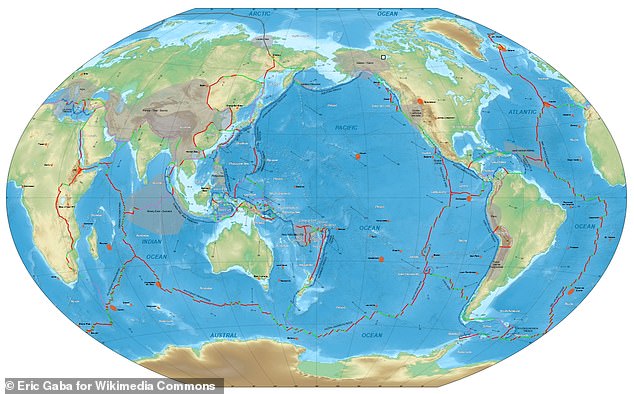
It is widely recognized that Earth's lithosphere – its outermost rocky shell, which includes the upper part of the mantle and the crust, is composed of roughly 15 tectonic plates.
Seismic activity can be observed along the edges of tectonic plates, as they come into contact with one another.
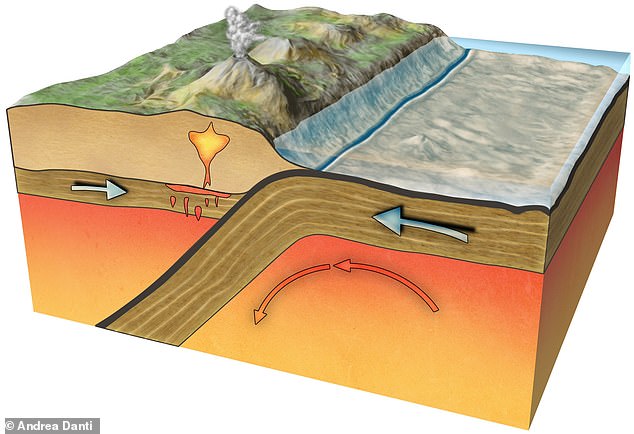
However, in Earth's distant past, massive tectonic plates have been consumed into the planet's mantle through the process of "subduction".
This is the geological process where one plate is pushed beneath the edge of another, with the potential for an entire plate to be disappeared over time.
Historically, seismologists have identified the location of submerged tectonic plates within the Earth's mantle, but they have been found beneath subduction zones.
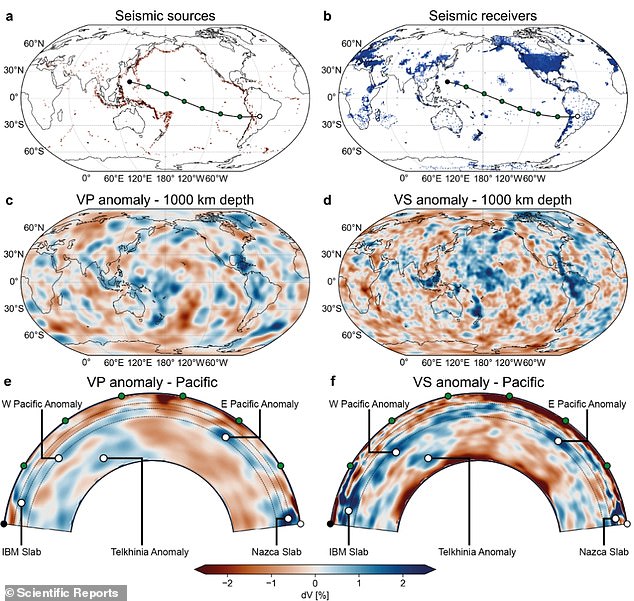
In the new study, ETH Zurich and Caltech researchers applied a computational method called 'full-waveform inversion', which creates a 3D representation of the Earth based on seismic wave data.
They identified areas beneath the Pacific Ocean that appear to be remnants of submerged plates, located far from plate boundaries, with no signs of evidence that suggests past subduction likely occurred.
The vast Pacific Ocean should not be located over a zone of subduction, considering its single, extensive plate.
The existence of these anomalies implies that they are not fragments of lost submerged plates. Nevertheless, the identification of the actual substance in question or its possible implications for the internal workings of Earth remains unknown.
"It's like a doctor who has been studying blood circulation with ultrasound for decades and finds arteries exactly where he expects them when using the technique," said co-author Professor Andreas Fichtner, seismologist at ETH Zurich.
This is similar to when a doctor gives a patient a more advanced medical equipment, and suddenly can see an abnormal artery in the buttock that was previously unnoticed. This is exactly how we perceive the new findings.
However, the researchers do provide some theoretical explanations for the anomalies, which require more detailed information from the waves, including their characteristics beyond their speed, in order to form any firm conclusions.
They could be ancient, silica-rich material formed approximately four billion years ago during the formation of the mantle.
Alternatively, they could be areas where iron-rich rocks gather because of movements of the mantle over billions of years.
They conclude in their paper "There is a diverse range of potential explanations for the detection of positive wave speed anomalies in Earth's lower mantle other than the presence of subducted slabs."
'Our research emphasizes the vital part that full waveform inversion plays in the exploration of the mantle.'
Read more
Join the conversation