Lost world with a 280-million-year-old ecosystem discovered by hiker
.
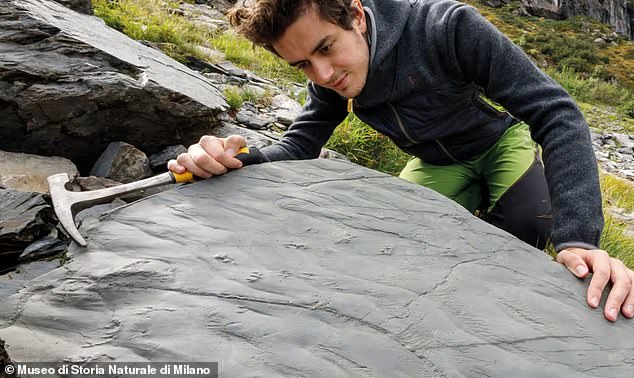
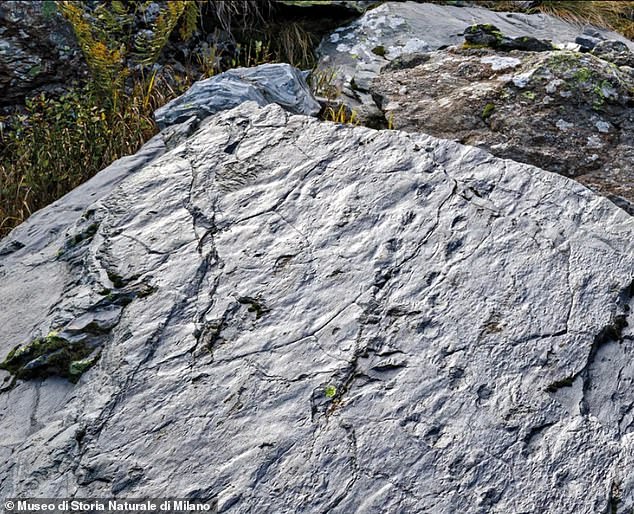
Claudia Steffensen and her husband were trekking along a trail in the Valtellina Orobie Mountains Park in Lombardy in 2023 when she chanced upon a light gray rock bearing 'strange designs.'
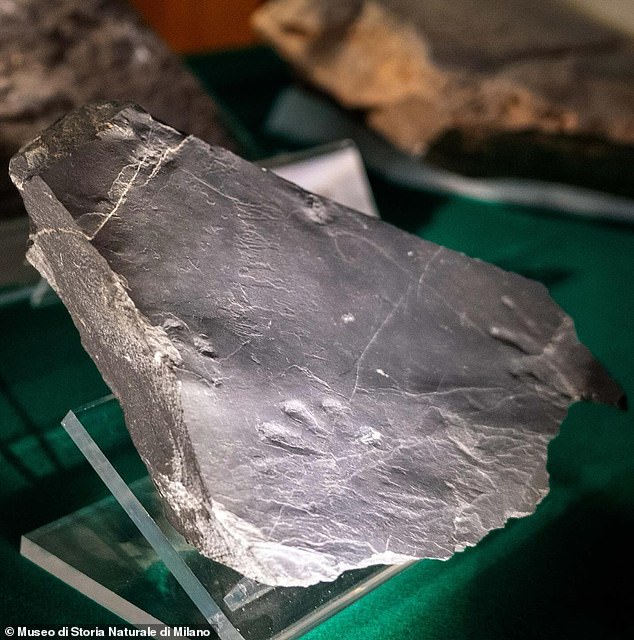
Upon closer inspection, she discovered the patterns to actually be animal footprints.
During the Permian period, the time immediately preceding the era of the dinosaurs.
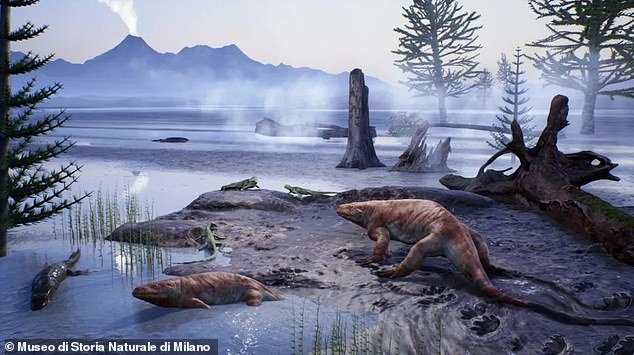
Investigations of the region uncovered numerous other fossilized footprints left behind by at least five fossilized species of ancient reptiles, amphibians and insects.
Although these animals existed before the dinosaurs, some were likely quite large, ranging in length from six to 12 feet, researchers stated.
The team also found imprints of ancient plant fossils - featuring impressions of seeds, leaves, and stems - along with impressions of raindrops and waves on the shores of an ancient lake.
said the prints were preserved in 'impressive' detail, even down to 'the imprints of fingernails and the belly skin of some animals.
The researchers stated that the exceptional preservation and intricate details of these fossils are attributed to their ancient proximity to water.
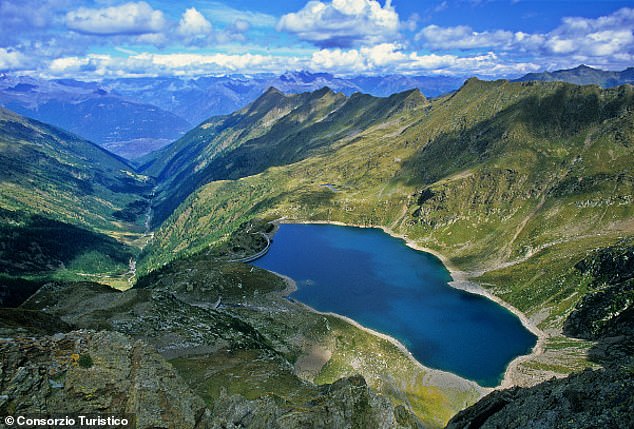
The ancient ecosystem is found at altitudes of up to 10,000 feet and in the valleys below, and has been preserved in fine-grained sandstone.
Researchers in the field of paleontology have also identified distinctive claw marks and patterns coming from the underside of ancient creatures.
.
"The summer sun, drying out these surfaces, caused them to become hard to the point that the return of new water did not remove the footprints but, instead, covered them with new clay, forming a protective layer," Ronchi stated.
The Permian period extended from approximately 299 to 252 million years ago.
During this time, the world's climate rapidly heated up, ultimately resulting in a catastrophic mass extinction event that signaled the end of this era and led to the demise of 90 percent of Earth's species.
Ironically, the current worldwide rise in temperatures allowed for the discovery of this ancient alpine ecosystem by revealing the existence of this fossil bed, which had previously been concealed beneath a thick layer of snow that has began to melt.
.
'The remarkable aspect was the altitude - this evidence was discovered at extremely elevated levels and was exceptionally well preserved. This is an area prone to landslides, so there were also rock debris that brought the fossils to light.'
.
The discovery of these fossils provides a glimpse into a long-lost ecosystem brought to the brink of extinction by a drastic surge in global temperatures. This also serves as a reminder of what's at stake as mankind's activities drive atmospheric warming to potentially disastrous levels.
"They said these fossils provide evidence of a time far in the past, with a global warming trend remarkably similar to our present situation.'
'Reflection on past events is crucial to understanding the possible consequences of our current actions.'
Read more
Join the conversation