Mysterious 'donut' structure is discovered hidden inside Earth's core
- Researchers have identified a toroidal structure existing at the boundary of the Earth's outer core.
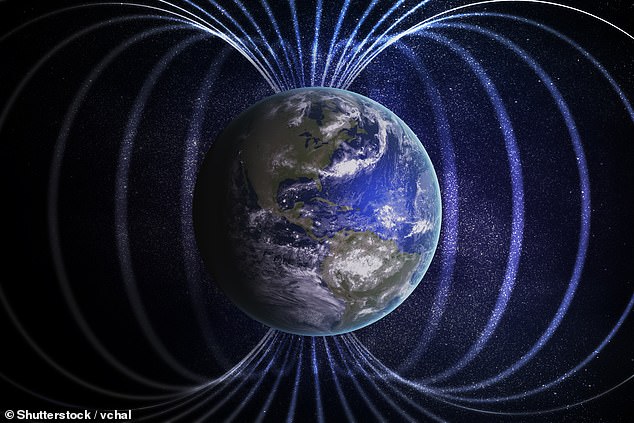
- This lighter area assists in stirring the liquid metal, which in turn generates the magnetic field.
Researchers have discovered a massive ring-shaped formation located deep within the planet, extending thousands of miles downwards.
To gaze into the depths of the Earth's deep and enigmatic molten core.
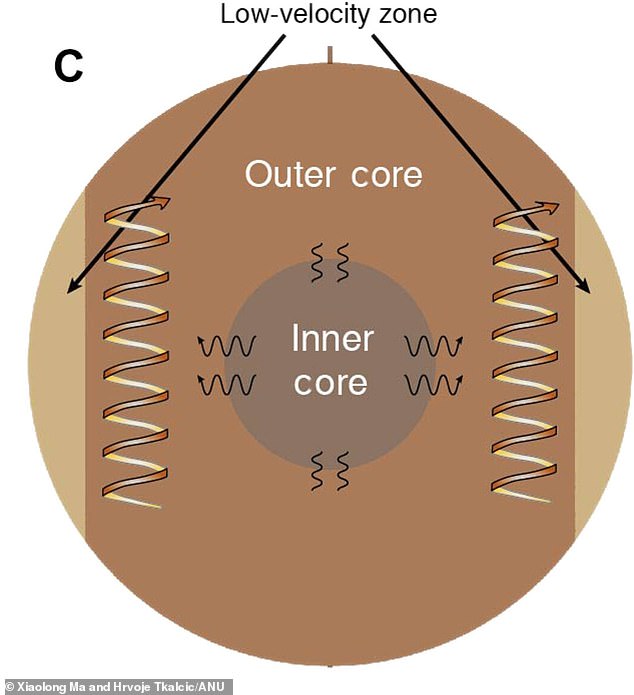
Scientists tracked the journey of these seismic waves through the Earth, discovering a zone approximately a few hundred kilometers thick in which they moved two percent slower than average.
This doughnut-shaped structure runs parallel to the equator as a ring around the edge of the liquid outer core, and could be accountable for generating our planet's safeguarding magnetic field.
Professor Hrvoje Tkalčić, the lead author of the study, states: 'The magnetic field is a fundamental element that we need for life to be maintained on the surface of our planet.'
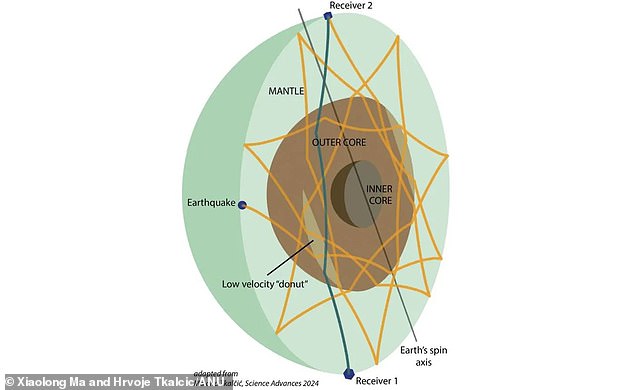
The surface crust, the semi-molten mantle, a liquid metal outer core, and an inner solid metal core.
When tectonic plates in the Earth's crust move, causing earthquakes, it releases tremors that travel through all the layers of the Earth.
Researchers can visualize how the waves resonate and anticipate characteristics of the conditions beneath the water surface.
Seismologists typically focus on the significant, high-energy seismic waves that propagate globally during the initial hour following an earthquake.
However, Professor Tkalčić and his co-author Ma Xiaolong were able to detect this structure by studying the faint residues left behind by waves many hours after the initial earthquake.
Research showed that seismic waves traveling near the poles moved at a greater speed compared to those moving near the equator.
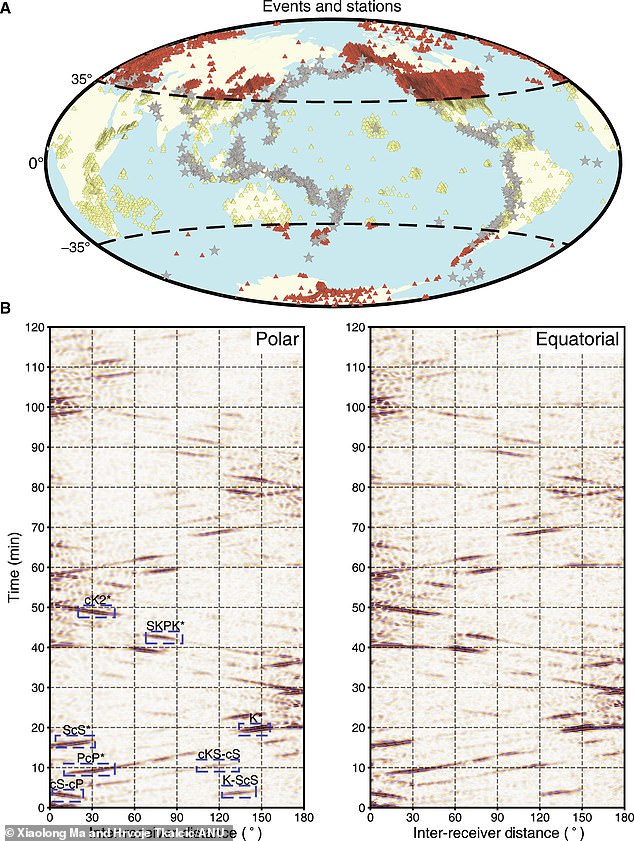
By comparing their findings to different models of the Earth's interior, Professor Tkalčić and Dr. Ma found that their results were best explained by the presence of a large, buried 'torus', or doughnut-shaped, area.
They forecast that this region exists only at low latitudes and extends parallel to the equator at the boundary where the outer core's liquid section intersects the mantle near the ceiling.
"We're not certain regarding the specific thickness of the doughnut shape, but it's likely to extend a few hundred kilometers below the boundary between the Earth's core and mantle," Professor Tkalčić remarks.
Due to this region's significant importance, their discovery may also have far-reaching implications for the study of life on Earth and other planets.
Earth's external core has a diameter of about 2,160 miles (3,480km), which is slightly larger than that of Mars.
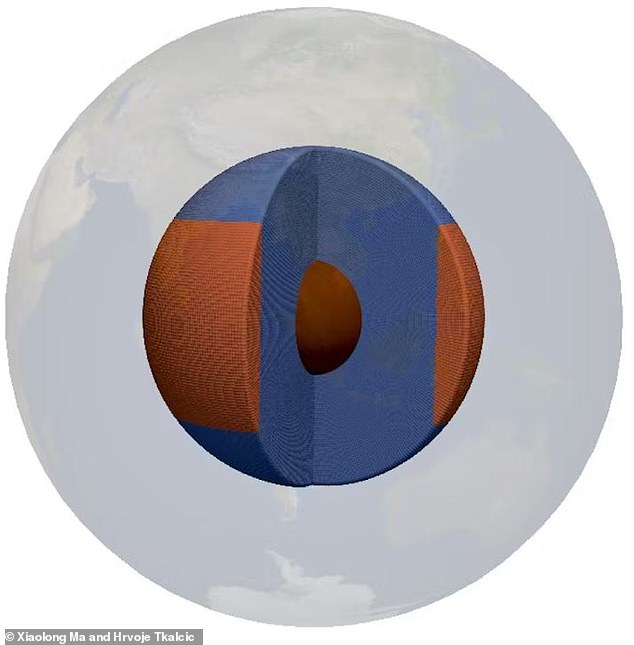
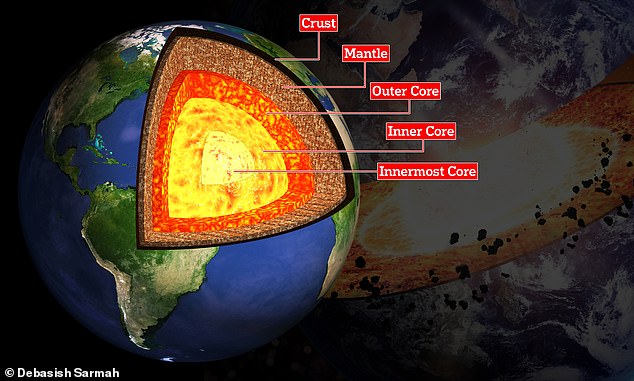
Located beneath the earth's surface, a liquid metal layer consisting primarily of nickel and iron is forced into massive vertical spirals that stretch from the north to the south by a combination of convection currents and the planet's rotation, resembling enormous whirlpools.
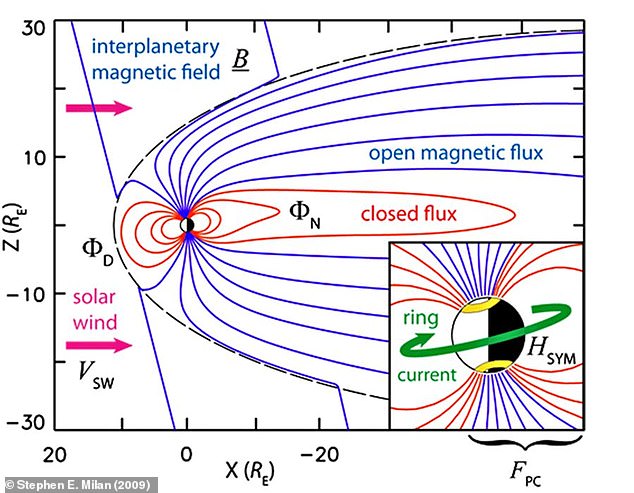
These liquid metal currents are the driving force behind the Earth's magnetic field, functioning as a powerful dynamo.
Since this donut region has risen to the top of the liquid outer core, it suggests that it could be rich in lighter elements such as silicon, sulfur, oxygen, hydrogen, or carbon.
Our research has a significant finding, stated by Professor Tkalčić, who notes: "The lower-than-expected velocity within the central core points to a higher presence of lightweight chemical substances in these areas, which tend to decelerate seismic wave propagation."
'These light chemical compounds assist in circulating the molten material in the outer core due to temperature variations.'
Without that constant movement to power the planet's internal dynamo, the Earth's magnetic field may not have formed.
From the sun which can damage the DNA of living organisms.
This donut-shaped region, therefore, could serve as a crucial piece of the puzzle that might explain why life has developed on Earth and what we should look for in habitable planets elsewhere.
Dr. Tkalčić concludes: 'Our findings could motivate further research into the magnetic field of the Earth and other planets.'
Read more
Join the conversation